Highlights
- Explore a private collection with works by Picasso, Chagall and Miró
- Immerse yourself in an elegant atmosphere with musical accompaniment
- Visit a secret museum on the Zattere waterfront
- Avoid the wait and enjoy a seamless visit
- Reach St. Mark's Square with a 15-minute walk
Description
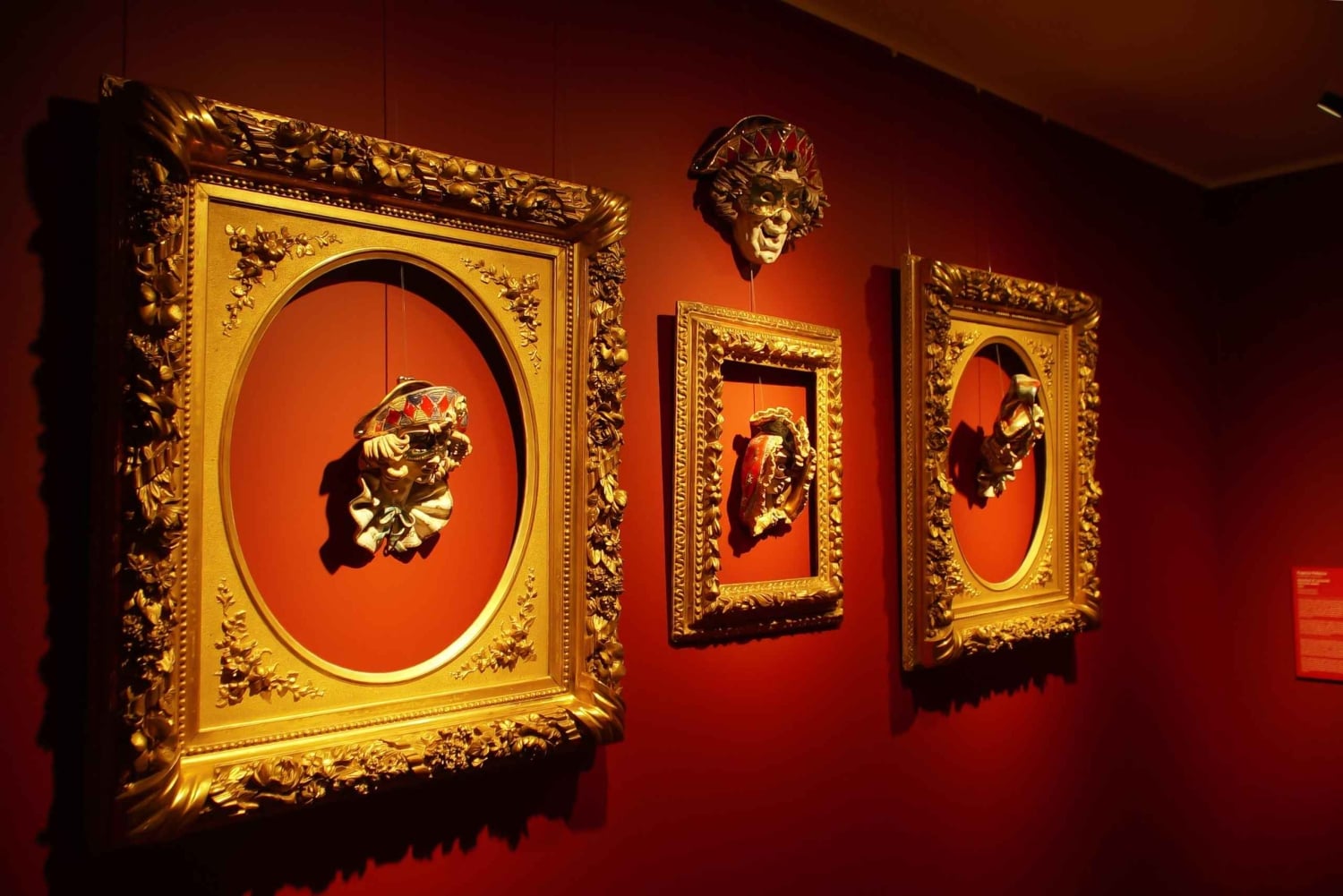
Presenting Carnival as an aesthetic and social phenomenon. And where better than in Venice? The Venice Carnival Museum aims to strengthen the link between the local cultural identity – in the Serenissima, Carnival was declared a public holiday by Senate decree in 1296 – and the artistic imagination that, over time, has drawn on the evocations of an ancient collective ritual. At Palazzo Dolcetti, on Fondamenta Zattere al Ponte Longo, this story takes shape through paintings, sculptures and ceramics, and historical costumes that make up Arnold Uvarov's private collection. For many years, the collector has been gathering works inspired by Carnival and Commedia dell'Arte, with the aim of bringing lost Venetian artifacts to light, but also of showing how much the Carnival of Venice has influenced the masters of art history. The Venice Carnival Museum, which is divided into five exhibition spaces, thus follows the common thread of transformation and ambiguity through the works on display, created by internationally renowned artists – from Gino Severini to Joan Miró and James Holland – and figures closely linked to Venetian tradition and the applied arts, such as Geminiano Cozzi and Luigi Fabris. The collection spans three centuries of history, from the 18th to the 20th century, and also includes two works by Picasso and a plate signed by Jean Cocteau (in the fifth room, dedicated to the 20th century and the evolution of Carnival in modern art). The visit begins by immersing visitors in the theatrical and spectacular dimension of Venice, and then goes on to explore the theme of identity and its disguises, celebrating the human figure and the social life of the Venice Carnival. Here, alongside paintings by Claudio Rinaldi and Henri Serur, are decorative porcelain works by Geminiano Cozzi and the dress that belonged to the favorite of the son of King Louis XV of France. The third room is a tribute to Venice through a series of oil paintings on canvas dating from the first half to the middle of the 20th century, depicting urban scenes, landscapes and festive moments of the Carnival. The room also houses Fabris' sculptures on the theme of the mask. The fourth room, on the other hand, focuses on the desire for modernity, elegance and progress that was emerging at the turn of the 20th century. Mariano Fortuny's Delphos dress is also on display to represent this period. It concludes with a focus on the influences of Carnival on the art world. The figures of the Commedia dell'Arte — Harlequin, Pulcinella, Pierrot — re-emerge as symbols of freedom, metamorphosis and inner resilience in the works of Picasso, Cocteau and Severini. And Carnival becomes an intimate and creative act. “We wanted to restore Carnival's complexity, to show its reflections in art, fashion and social life in different eras. This museum is a tribute to Venice, to its ability to transform itself and to inspire creativity at all times,” explains Uvarov.
Includes
Admission to the Venice Carnival Museum, access to the permanent collection, immersive exhibition route with musical accompaniment, self-guided visit of the museum spaces, assistance from on-site staff
Easy cancellation
Cancel up to 24 hours in advance for a full refund